The short answer
Before the day: send the adopter the pet's medical history (vaccines, heartworm testing and prevention, flea and tick prevention, current food) and agree on the plan. On the day: meet at a home, sign two copies of an adoption contract (Best Friends Animal Society calls it a safety net for both of you), and hand over the records, food, bowls, toys and bedding. After: transfer the microchip registration and any city registration. Dogs often hide, sleep more and eat less for the first few days; cats need a separate safe room at first. Agree in writing what happens if it does not work out.
LocalPetFinder is a directory, not a shelter or rescue. Shelter rules and fees change: each organization's own page has the current ones. The facts in this guide were checked against the cited pages on November 26, 2026.
Rehome your pet on LocalPetFinder, free
List your pet at no cost. They stay home until the right family is found, adopters message you through LocalPetFinder without seeing your email, and you choose who adopts. A person reviews every listing before it goes live.
You have found the right adopter. This page covers the part that follows: the last week, the handover itself, and the first weeks in the new home, seen from both sides. It follows the checklists Best Friends Animal Society, the ASPCA and Humane World for Animals give new adopters, plus the Texas registration rules in our city guides. If you are still choosing an adopter, start with how to screen adopters.
The week before: prepare the adopter
The adopter needs the same information a shelter would give them. Best Friends Animal Society tells new owners to get a pet's complete medical history before bringing it home, so send it ahead and let them pass it to their vet.
- Vaccines: whether the pet is up to date, with dates.
- Heartworm: whether the pet has been tested and is on a consistent preventive, which product, and how well it tolerated it (Best Friends' list).
- Fleas and ticks: which preventive has been used and any side effects noticed.
- Food: the brand and amount, so the adopter can switch gradually if they change it. Best Friends and Humane World for Animals both advise a gradual change to avoid an upset stomach.
- History and routine: likes and dislikes, favorite treats and toys, how the pet gets along with other animals, and any medical or behavior issues (Best Friends; Humane World for Animals asks owners to be open about all of these).
- Vet visit: Humane World for Animals suggests new owners take a new dog to the vet within a week. Suggest the adopter book it now.
The day: where, when and how
Pick a time when the adopter can be home for a few days afterward; Humane World for Animals suggests a weekend or days off for a new dog's arrival. Best Friends says a first meeting can be at your home, the adopter's, or neutral ground such as a park or a vet's office, and that if the adopters have cats, meeting in their home is best. For the handover itself, finish at a home.
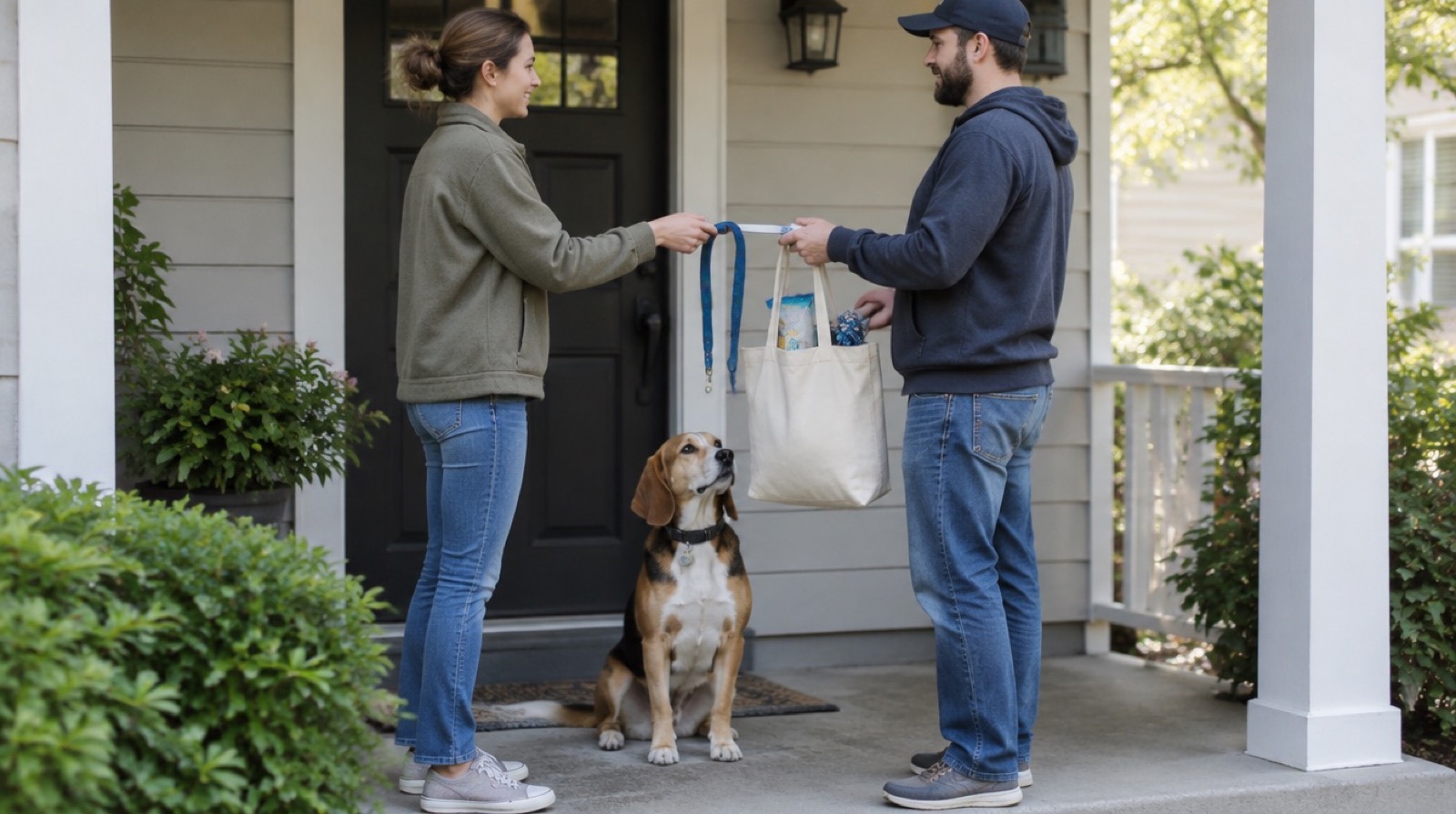
Keep the goodbye short and calm, then let the adopter take the lead. Bring everything packed in one bag so nothing is forgotten.
Rules on where and how a pet changes hands
Colorado: HB25-1180 (C.R.S. 35-80-108(1)(o)), in effect from Aug. 6, 2025, makes it a class 2 misdemeanor for anyone to give away, sell or offer a pet for adoption if, at the moment of transfer, the pet is somewhere public: a street, a park, a parking lot or an outdoor market. Licensed facilities and a few other cases are exempt. Dallas: under City Code Sec. 7-4.5, a person may not give away or transfer a dog or cat aged four months or more unless it is currently vaccinated (or a licensed vet verifies it cannot be) and the person holds a current registration receipt and registration tag; animal services, animal welfare organizations and adoption agencies have a defense. Look up your own city's rules before the day.
Handing over a pet you listed on LocalPetFinder
If your adopter came from a free LocalPetFinder listing, you should already have met the family, and planning the handover is up to the two of you. The private conversation page linked from each of their messages is where you can send the medical history and routine notes ahead of time and settle the details, and your own email and phone number stay off the listing.
- Use the conversation page in the week before. Send the vaccine dates, food brand and daily routine, and confirm the time and place.
- Collect any fee on the day. If your listing shows a rehoming fee, it changes hands on the day, once the adopter has met your pet, and not before.
- Finish at a home. Listings may not offer shipping or delivery, and Colorado bans handing a pet over in a parking lot or other public space.
- Mark your pet adopted with the link in our emails once it has gone home. Not listed yet? Start a free listing, or read how rehoming on LocalPetFinder works.
What to hand over
Best Friends Animal Society says an adoption contract "can be a safety net for both you and the adopter." Print two copies, sign both, and keep one each. Then hand over the records and the pet's familiar things.
| Item | Why it matters |
|---|---|
| Signed adoption contract (two copies) | Records the transfer and what happens if it does not work out |
| Vaccine records, including rabies | The adopter's vet needs them; some cities require current vaccines to transfer a dog |
| Other vet records and any spay or neuter certificate | Saves repeat tests and tells the vet the pet's history |
| Microchip number and the registry's name | The adopter needs both to take over the registration |
| City or county registration details | Some cities, including Houston, ask for the record to be updated when a pet is given away |
| Written history and routine | Food, schedule, likes, dislikes, behavior notes |
| A supply of the current food | Lets the adopter switch gradually |
| Bowls, toys and bedding | Familiar smells and objects in a new place |
| Collar or harness, leash, ID tag; a carrier for a cat | Best Friends suggests the adopter put an ID tag with their own details on a dog before leaving |
Items and advice from Best Friends Animal Society, Humane World for Animals and the Texas city rules in our guides.
Transfer the microchip and registration
Michelson Found Animals tells owners who rehome a pet that "you will need to transfer the pet's microchip registration to the new owner." The chip's ID number stays linked to the pet for good, so it only leads back to the right person if the registry's contact details change hands too. Each registry runs its own transfer process and some charge for it: PetLink lists a one-time $29.99 ownership transfer fee and lets either the current or the new owner start the transfer. If nobody knows the chip number, any vet's office or shelter can scan it.
Update local records as well. In Houston, BARC says a pet's City registration must be updated when it is given away. Our Texas city guides list each city's rules: Houston, Dallas, San Antonio, Austin and Fort Worth.
The first days: what is normal
Dogs. The ASPCA lists the behaviors new adopters often see in the first few days: accidents, pacing or whining, drinking a lot, eating little or nothing, barking at noises, little interest in people or toys, and following the owner from room to room. It suggests not leaving a new dog alone for the first 48 hours, offering a covered crate in a quiet spot, keeping meals and walks at regular times, and waiting on visitors, baths and nail trims. The Humane Society of North Texas calls the first three days a decompression period, when hiding and sleeping more are common.
Cats. Best Friends Animal Society says a new cat should start in a safe room with a door that closes securely, and that if there are other pets, a quarantine period of seven to 10 days, if possible, allows for any illness the stress of travel brings on. Introductions then go in steps: scent swapping with a towel, short visual meetings, then supervised contact.
Other pets. Best Friends says new dogs should meet on leash in neutral territory, one at a time, and that new and resident dogs should not be left together unsupervised at first, should eat apart, and should not have prized toys, treats or beds to compete over.
Tell the adopter when to call a vet
A dip in appetite in the first days is common. The Humane Society of North Texas says to contact a veterinarian if a newly adopted dog refuses food for an extended period or shows signs of illness. Best Friends adds that the stress of a move can aggravate underlying disease.
The first weeks and months
Adjustment is gradual. The Humane Society of North Texas describes a dog's first three weeks as the time it learns routines and starts to show its personality, and the first three months as the point by which many dogs feel secure, with some faster and some slower. Best Friends tells adopters a pet may need weeks to months to get used to new people and surroundings. Our page on whether your dog will be okay covers what to expect at each stage.
Staying in touch, and the return plan
Agree on contact in the contract: whether the adopter will send updates, and that they will call you first if they ever cannot keep the pet. Humane World for Animals notes that some shelters and rescues write a return clause into their own adoption contracts; doing the same gives your pet a fallback.
If the placement fails, take the pet back if you can and use what you learned to choose a better match. If you cannot, and you got the pet from a shelter, rescue or breeder, call them: some take back their own animals. A shelter surrender is the last resort; our guides to surrendering a dog and surrendering a cat explain how intake works.
Local dog surrender and rehoming guides
Each city guide compares how that city's shelters take in owned dogs, what they charge, and the help that can let you keep your dog.
Local cat surrender and rehoming guides
Each city guide compares how that city's shelters take in owned cats, what they charge, and the help that can let you keep your cat.
Frequently asked questions
Tap a question to expand
What should I give the new owner when I rehome my pet?▼
Where should I hand over my pet?▼
How do I transfer my pet's microchip to the new owner?▼
How long does it take a rehomed pet to settle in?▼
How should a new owner introduce my cat to their home?▼
What if the adopter wants to give my pet back?▼
Can I talk to the adopter before handover day?▼
More rehoming help
Guides for your situation
Why you are rehoming changes what to do first. Pick the guide that matches your situation, or start with the decision guide if you are still weighing it.
State rehoming guides
What the big shelters in each state ask at surrender, the help that may let you keep your pet, and the state law on giving up an animal.
Breed-specific rehoming guides
Rehoming a Husky is a different job than rehoming a Chihuahua. These guides cover the breed rescues worth contacting first and what adopters of each breed look for.