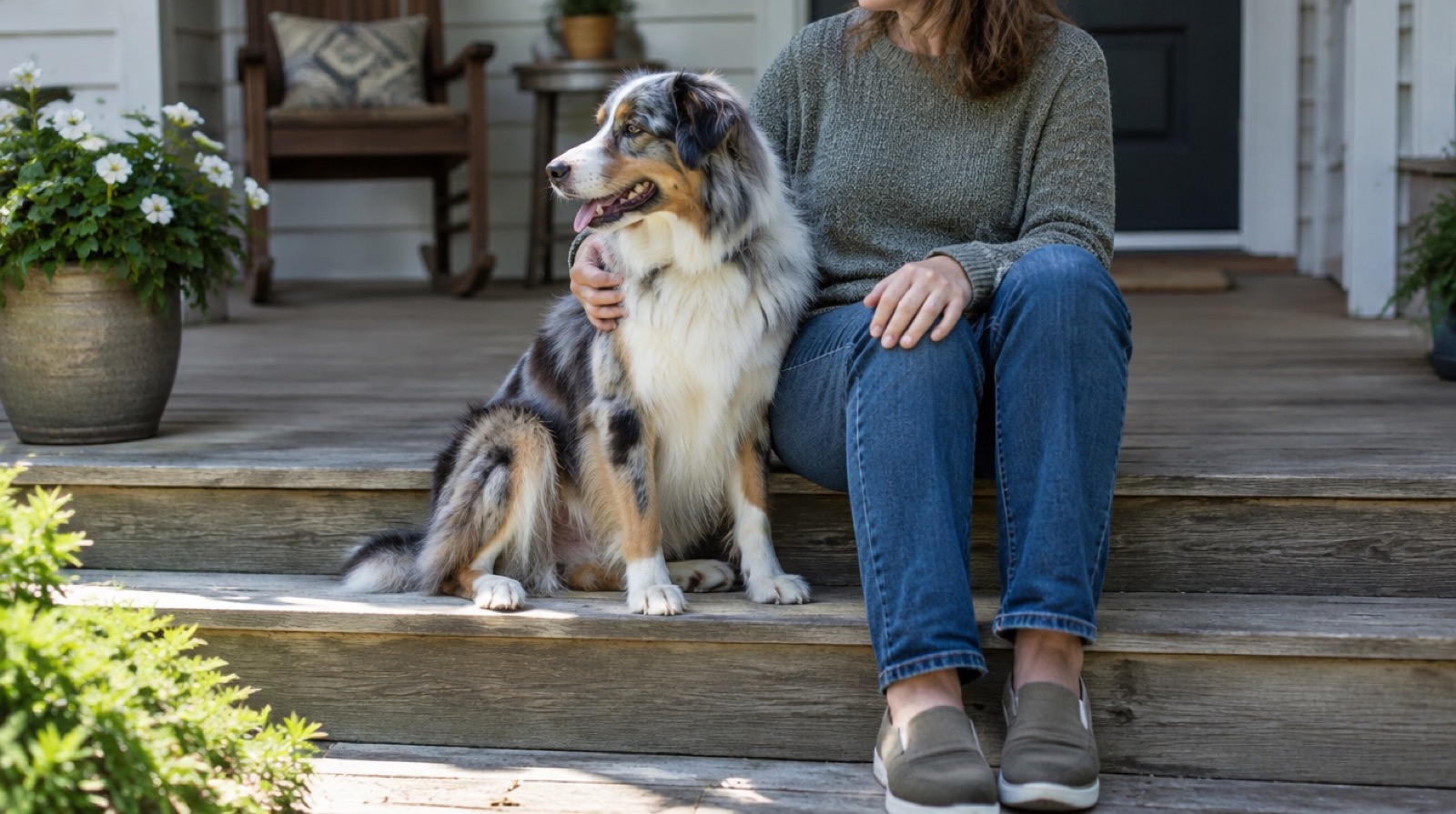
The short answer
Call the breeder or rescue you got your Aussie from first, since some contracts ask for the dog back. Then contact an Australian Shepherd rescue: Aussie Rescue & Placement Helpline (ARPH) has representatives in Texas and 13 other states and provinces, and Texas groups such as South Texas Aussie Rescue and Lone Star Aussie Rescue take owner requests. Expect to keep your dog until a foster spot opens. While you wait, screen your own adopters for daily exercise, a job for the dog and a plan for herding, and disclose any nipping or chasing.
LocalPetFinder is a directory, not a shelter or rescue. Shelter rules and fees change: each organization's own page has the current ones. The facts in this guide were checked against the cited pages on November 26, 2026.
Rehome your dog on LocalPetFinder, free
List your dog at no cost. They stay home until the right family is found, adopters message you through LocalPetFinder without seeing your email, and you choose who adopts. A person reviews every listing before it goes live.
South Texas Aussie Rescue describes the risk plainly: a smart herding dog without enough to do becomes frustrated and hard to live with. That is a problem with fit, not with you or the dog, and it is what a careful rehoming fixes. This guide covers why Aussies come into rescue, how breed rescues handle owner requests, how to screen adopters yourself, and what to disclose. For the general steps, see how to rehome a dog.
Why Australian Shepherds end up needing new homes
South Texas Aussie Rescue describes the breed as bold, alert, independent and smart, with the stamina to herd all day. Without a chance to use that energy and mind, it says, the dog "is apt to become frustrated and difficult to live with daily." It adds that Aussies may try to herd children and small animals, and that the breed is happiest with a job and needs a strenuous daily workout that mixes physical and mental challenges.
Other reasons are the ones any family meets: a move, a new baby, a work schedule that changed, money, or a death in the family. Lone Star Aussie Rescue says it receives rehoming requests daily. If the problem behind your decision is temporary, our guides on moving, a new baby and financial hardship cover help that can keep a dog at home.
Aussie rescues and how owner requests work
Breed rescues are foster based and have limited space, so a request is a start, not a guarantee. ARPH, a volunteer 501(c)(3) started by rescuers who joined forces in 1992, routes each owner form to the representative for your area and says it may ask you to keep your dog until it has foster space or can help you find a home directly. It asks owners to plan ahead, since it "may not be able to assist if only given a few days' notice." It accepts only purebred Australian Shepherds (papers are not required), may evaluate temperament first, and refers Mini Aussies and Miniature American Shepherds to Miniature American Shepherd Rescue.
Texas groups set their own limits. South Texas Aussie Rescue says it cannot accept Mini Aussies, Aussie mixes, Aussies with tails or dogs with any aggression issues, and its release form says the service is free, with a donation appreciated. Lone Star Aussie Rescue focuses on Australian Shepherds only and says you must surrender the dog and all ownership rights if it takes your Aussie; its questionnaire does not reserve a spot. North Texas Australian Shepherd Rescue says it is strictly foster based and cannot take a surrender without a foster spot. Its menu links to a live surrender application, but the site also keeps a notice saying it is closed for intake and not accepting owner surrenders, so check its surrender page before you count on it.
If your Aussie came from one of these rescues, contact that rescue first. Lone Star Aussie Rescue, for example, says its adoption contract requires its dogs to come back to it.
Australian Shepherd rescues that take owner requests
Aussie Rescue & Placement Helpline (ARPH)
Owners fill in a form that goes to the representative for their area. Purebred Australian Shepherds only (papers not required); no mixes or minis. May ask you to keep the dog until foster space opens, and asks for more than a few days' notice. Texas is among the areas it covers.
South Texas Aussie Rescue (STAR)
Owner release form with a full-body photo. Cannot accept Mini Aussies, Aussie mixes, Aussies with tails or dogs with aggression issues. Its release form says the service is free; a donation is appreciated.
Lone Star Aussie Rescue
Rehoming questionnaire for Australian Shepherds only. Placement depends on foster space and funds, and the questionnaire does not reserve a spot. If accepted, you surrender the dog and all ownership rights.
P.O. Box 14, Cedar Hill, TX 75106
North Texas Australian Shepherd Rescue (NTASR)
One surrender application per dog. Strictly foster based, so it cannot take a dog without a foster spot. The site also keeps an intake-closed notice, so check before you apply; that notice offers email help with behavior or money problems to owners trying to keep their dog.
Listing an Australian Shepherd on LocalPetFinder while you wait for a rescue
Aussie rescues often ask owners to keep the dog until a foster spot opens, and ARPH says it may help you find a home directly. A free LocalPetFinder listing fits that waiting time. Your Aussie stays home, adopters message you through LocalPetFinder, and you do the screening the rescues would do.
- Check the contract first. If your Aussie came from a rescue such as Lone Star Aussie Rescue, its contract requires the dog back, so call before you list.
- Describe a working day. Set the Energy Level honestly and say what your dog needs daily: hard exercise plus something to think about.
- Name the herding. Say whether your dog nips at running children or chases other pets, and mark Good with kids to match.
- Say if it is a mini or a mix, so the breed you type matches what you put on rescue forms.
- Start a free listing, or read how rehoming on LocalPetFinder works first.
Screening an adopter for an Aussie
Best Friends Animal Society suggests talking with each person by phone before a meeting, asking about their experience with pets, their household and where the dog will live, and then meeting in person, ideally on a walk. For an Australian Shepherd, two questions matter most. First, what will a normal weekday look like for the dog, and who will give it both exercise and something to think about? Second, how will the household handle herding, such as nipping at running children or chasing other pets?
Rescue rules give a sense of what experienced Aussie people look for. Lone Star Aussie Rescue screens with a background check, a vet check, personal references and an in-person home visit, and it favors applicants with breed experience. South Texas Aussie Rescue does not place with children under 6 and does not deliver dogs. You do not have to copy these rules, but they show the questions worth asking.
- Daily routine: exercise, training, a dog sport or hiking, not just a fenced yard.
- Children and pets: ages of children, other dogs and cats, and how they will manage herding.
- Experience: whether they have lived with a herding breed before.
- Housing: whether a landlord or HOA allows the dog, and whether the yard is fenced.
- References: a current vet and a personal reference you actually call.
What to disclose and hand over
Tell adopters everything. Humane World for Animals wants owners to describe the pet's temperament, its history with people and other animals, and any health or behavior problems. For an Aussie that includes herding, nipping, fence jumping, reactivity and how long it can be left alone. South Texas Aussie Rescue's own form asks about crate, leash and house training, barking, digging, fence jumping, medications, seizures and allergies, which makes a useful checklist for your own write-up.
Hand over the vet and vaccine records, any registration papers, the microchip number and registry, and a signed adoption contract, then transfer the microchip registration to the new owner. If you need help with the paperwork, see how to screen adopters. Never leave a dog behind: in Texas, Penal Code 42.092 makes unreasonably abandoning an animal in your custody a Class A misdemeanor.
Mini Aussies follow different rules
ARPH and South Texas Aussie Rescue do not take Mini Aussies, and ARPH points owners of Mini Aussies and Miniature American Shepherds to Miniature American Shepherd Rescue. If your dog is a mini or a mix, say so on every form you fill in.
Fees and if a rescue cannot help
We do not suggest a rehoming fee. For reference, rescue adoption fees for Aussies in Texas run from $300 at ARPH to $500 for some dogs at North Texas Australian Shepherd Rescue, and South Texas Aussie Rescue lists $400 as its minimum. Those fees cover vetting a rescue has already paid for. A fee alone does not protect your dog; screening does.
If no rescue has room, keep your dog while you look, since Humane World for Animals advises that a pet usually does best staying in its own home while you look. Our guide on what to do if you cannot find an adopter covers next steps, and our city guides for Houston, Dallas, Fort Worth, San Antonio and Austin list local shelter surrender rules. You can also browse Australian Shepherds for adoption to see how rescues describe their dogs.
Local dog surrender and rehoming guides
Each city guide compares how that city's shelters take in owned dogs, what they charge, and the help that can let you keep your dog.
Frequently asked questions
Tap a question to expand
Where can I surrender my Australian Shepherd?▼
Will an Aussie rescue take my dog right away?▼
Do Aussie rescues take Mini Aussies or Aussie mixes?▼
My Aussie nips and herds my kids. Can I still rehome him?▼
Should I charge a rehoming fee for my Australian Shepherd?▼
Is it legal to leave my Aussie at a shelter or let it go?▼
Can I list my Aussie on LocalPetFinder if a rescue asked me to keep him for now?▼
More rehoming help
Guides for your situation
Why you are rehoming changes what to do first. Pick the guide that matches your situation, or start with the decision guide if you are still weighing it.
State rehoming guides
What the big shelters in each state ask at surrender, the help that may let you keep your pet, and the state law on giving up an animal.
Breed-specific rehoming guides
Rehoming a Husky is a different job than rehoming a Chihuahua. These guides cover the breed rescues worth contacting first and what adopters of each breed look for.