The short answer
Start with the breeder or shelter you got your cat from; Humane World for Animals notes an adoption contract may require the cat's return. Maine Coon rescues that publish an owner-surrender process are hard to find, so plan a direct rehoming with the cat at home. Share any heart screening: Cornell's Feline Health Center lists the Maine Coon among breeds where hypertrophic cardiomyopathy (HCM) is more prevalent. Tell adopters what the Cat Fanciers' Association says: males can exceed 20 pounds, the breed can take up to three years to finish growing, and the coat needs combing two or three times a week.
LocalPetFinder is a directory, not a shelter or rescue. Shelter rules and fees change: each organization's own page has the current ones. The facts in this guide were checked against the cited pages on November 26, 2026.
Rehome your cat on LocalPetFinder, free
List your cat at no cost. They stay home until the right family is found, adopters message you through LocalPetFinder without seeing your email, and you choose who adopts. A person reviews every listing before it goes live.
This guide is for Maine Coon owners in the US. It covers who to call first, what health and grooming history a new owner needs, how to find and screen an adopter, and how to help the cat settle. Our general guide on how to rehome a cat walks through each step.
What a new owner should know about the breed
The Cat Fanciers' Association (CFA) calls the Maine Coon the largest of all pedigreed cats. It says the breed is slow to mature, taking up to three years to reach full growth, and that a mature male can reach or exceed 20 pounds while females are usually smaller. Maine Coons are sociable and get along well with children and other animals, CFA says, though both may be intimidated at first by the cat's size.
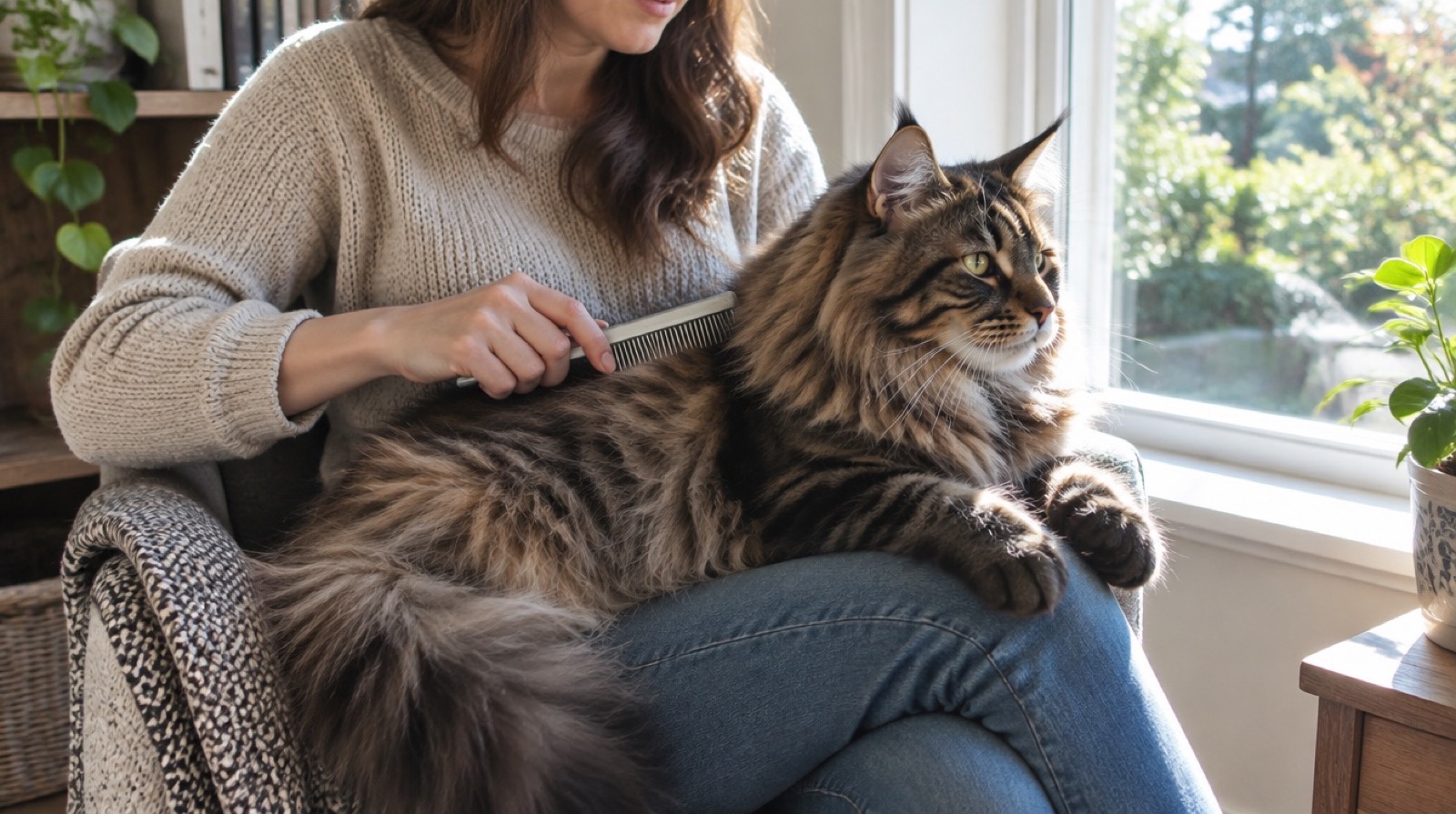
The coat needs regular work. CFA says breeders recommend combing a Maine Coon two or three times a week to control shedding, prevent hairballs and protect against matting. If an allergy is behind your decision, our allergy guide covers ways some families manage before deciding.
Heart and health records
Cornell University's Feline Health Center says hypertrophic cardiomyopathy, which thickens the muscular walls of a cat's heart, is more prevalent in certain breeds including the Maine Coon, and that it is diagnosed by echocardiography. CFA notes that breeders test for HCM and for hip dysplasia. If your cat has had an echocardiogram or hip X-rays, or came with a breeder's health guarantee, pass those papers on.
Humane World for Animals asks owners to share a pet's medical and behavior issues so adopters can judge the fit. Include vaccines, spay or neuter, microchip details, diet and any hairball or grooming problems.
Finding an adopter without a breed rescue
Your first call is the breeder or shelter you got the cat from. Humane World for Animals says an adoption contract may require the cat to go back, and that the breeder or group may help you find a home even without one. After that, the routes are the ones every cat owner uses:
- People you know, who Humane World for Animals calls the best pool of adopters.
- Your vet's office and pet supply stores, for a flyer, as Best Friends Animal Society suggests.
- Local shelters and cat rescues, some of which post a courtesy listing while the cat stays with you or point owners to online rehoming services.
- Breed groups. Best Friends suggests searching for the breed plus breed rescue and your state; confirm on a group's own site that it takes owner surrenders before you rely on it.
Listing a Maine Coon on LocalPetFinder
Since a Maine Coon rescue with a published owner-surrender process is hard to find, a free LocalPetFinder listing is a practical direct route once you have checked with the breeder or shelter your cat came from. Your cat stays home, adopters see it with the shelter and rescue cats in your city, and adopters contact you through private messages on LocalPetFinder.
- Give the real weight. The form's Large option covers anything from 12 pounds up, so add the actual weight in the description; CFA says a mature male can reach 20 pounds or more.
- Mention heart screening. Note any echocardiogram, hip X-rays or breeder health papers, and keep copies for the adopter you choose.
- Describe the combing. Say how often you comb your cat and whether it has had mats or hairballs.
- Answer the kids and other-cats questions. CFA says children and other animals may be intimidated by the cat's size at first, so say how yours gets on.
- Start a free listing, or read how rehoming on LocalPetFinder works first.
Screening, handover and settling in
Talk to each applicant by phone, then meet. Best Friends Animal Society says that if the adopters already have cats, meeting in their home is best. Ask about resident pets, children, how much time the cat will have company, and who will do the combing. Finish with a written agreement in two copies, the records and the microchip transfer; our guide to screening adopters has the questions. We do not suggest a rehoming fee amount; the national guides cited here do not set one.
Warn the new owner that settling in takes time; Best Friends notes it can be weeks or even months before a pet is at ease with new people and surroundings. If nothing works out, our cat surrender guide explains shelter intake. Never let the cat loose: in Texas, Penal Code 42.092 makes unreasonable abandonment of an animal a Class A misdemeanor.
Rehoming guidance for cat owners
Humane World for Animals
Formerly the Humane Society of the United States. Advice on keeping a pet through a hard patch, checking your adoption or breeder contract, and finding a new home yourself.
Best Friends Animal Society
A step-by-step rehoming guide: photos, flyers, phone screening, meeting in the adopter's home when they have cats, and a written contract.
Local cat surrender and rehoming guides
Each city guide compares how that city's shelters take in owned cats, what they charge, and the help that can let you keep your cat.
Frequently asked questions
Tap a question to expand
Is there a Maine Coon rescue that will take my cat?▼
What is HCM, and should an adopter know about it?▼
How big will my Maine Coon get?▼
My Maine Coon has mats. Is that a problem for rehoming?▼
Should I charge a rehoming fee for my Maine Coon?▼
How long will my Maine Coon take to settle in a new home?▼
What should my Maine Coon's listing say about health?▼
More rehoming help
Guides for your situation
Why you are rehoming changes what to do first. Pick the guide that matches your situation, or start with the decision guide if you are still weighing it.
State rehoming guides
What the big shelters in each state ask at surrender, the help that may let you keep your pet, and the state law on giving up an animal.
Breed-specific rehoming guides
Rehoming a Husky is a different job than rehoming a Chihuahua. These guides cover the breed rescues worth contacting first and what adopters of each breed look for.