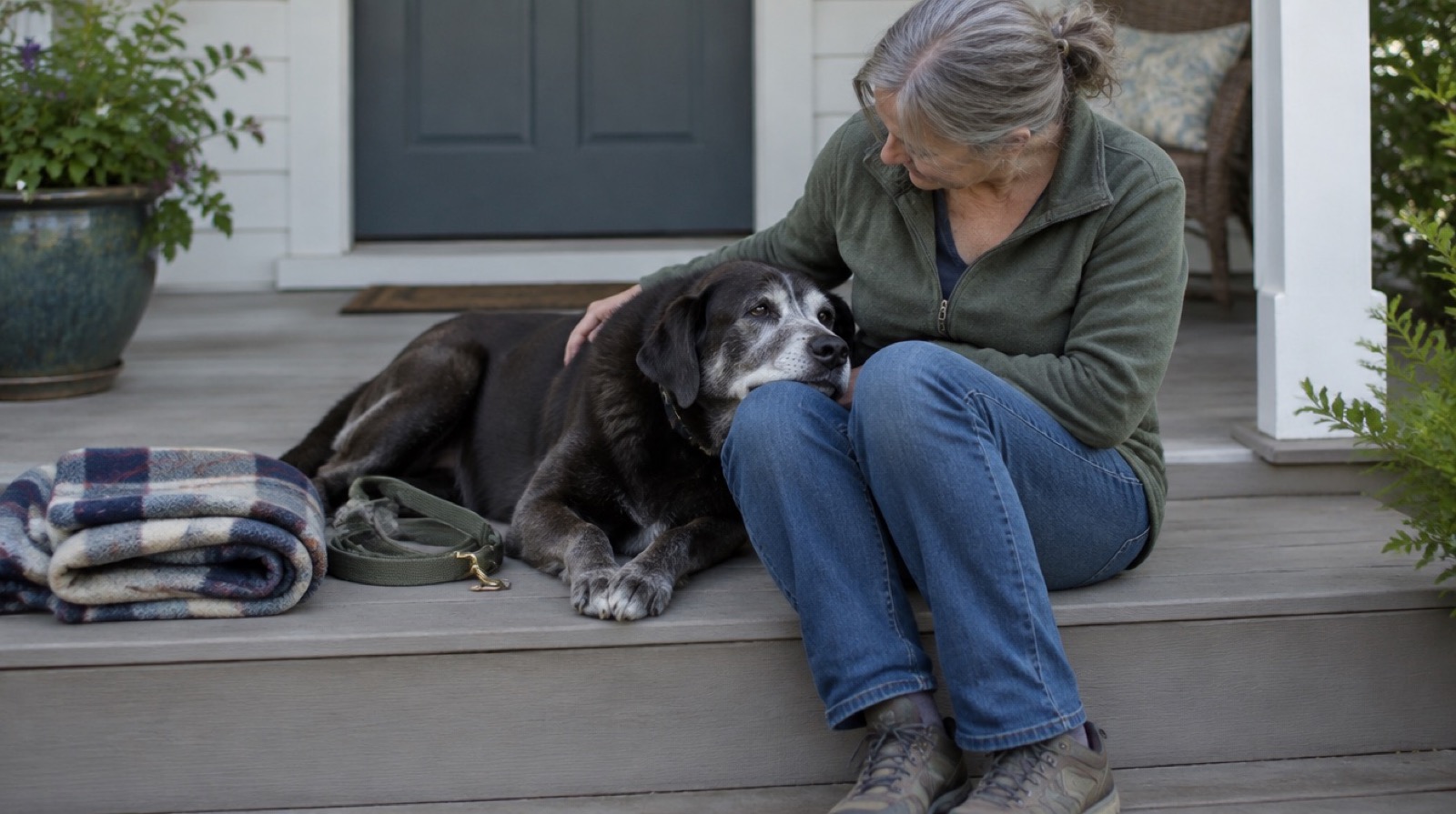
The short answer
First, line up a caregiver and supplies: Best Friends Animal Society suggests about two weeks of food, any medicines and supplies, the vet's contact details and written care notes. Then look for the owner's wishes: a will or trust may name a caregiver or set aside money for the pet, and in Texas, Property Code 112.037 allows a trust for the care of an animal. Check the adoption contract: some rescues require a pet to come back to them. If no one in the family can keep the pet, rehome it directly with a screened adopter, tell adopters its story honestly, hand over its records and transfer the microchip. A shelter is a last resort.
LocalPetFinder is a directory, not a shelter or rescue. Shelter rules and fees change: each organization's own page has the current ones. The facts in this guide were checked against the cited pages on November 26, 2026.
Rehome your pet on LocalPetFinder, free
List your pet at no cost. They stay home until the right family is found, adopters message you through LocalPetFinder without seeing your email, and you choose who adopts. A person reviews every listing before it goes live.
This guide is for family members, friends and executors who find themselves responsible for a pet after a death. It covers the first days, the documents that can decide where the pet goes, the questions to ask before someone keeps it, and how to rehome it with the care its owner would have wanted. It is not legal advice: for questions about the estate, talk to the executor or an estate attorney.
The first days: care before decisions
Nobody has to decide a pet's future the week of a funeral. What the pet needs right away is someone to feed it, walk it or clean its litter box, and keep it safe. If it cannot stay in the home, a relative, a friend, a pet sitter or a boarding kennel can look after it for a few weeks while the family decides.
Best Friends Animal Society's advice for emergency pet care gives a good checklist. Gather about a two-week supply of food, medicines and supplies such as litter and a carrier. Find the vaccination records, the medicine schedule and the vet's contact information, and write down the pet's diet, walking routine and any behavior notes so anyone caring for it can follow them. Check that its ID tag and microchip details are current.
| Find this | Where to look | Why it matters |
|---|---|---|
| The vet's name and records | Bills, a pet carrier, the fridge door, the owner's phone or email | Vaccines, medicines and health history for any caregiver or adopter |
| Medicines and the schedule | Kitchen, bathroom, the vet's office | Any caregiver needs to know what the pet takes and when; ask the vet if you are unsure |
| The microchip number | Vet records or adoption papers, or have a vet or shelter scan the pet | Needed to move the registration to the next owner |
| Adoption contract or bill of sale | The owner's files | Some rescues and breeders require the pet to come back to them |
| Will, trust or written wishes | The executor, the estate attorney or the owner's papers | May name a caregiver or set aside money for the pet |
| City license or registration | Tags, vet records, city mail | Some cities require an update when a pet changes owners |
Best Friends Animal Society says most vet clinics and animal shelters, and some police and fire stations, have microchip scanners.
Look for a plan the owner left
Many owners plan for this. Best Friends Animal Society advises pet owners to name both emergency and permanent caregivers, with backups, and to write those wishes into a will or trust. It suggests the plan include permission to use estate funds for the pet's care and costs such as transport to a new home, and possibly a trustee to oversee it. Ask the executor or the family's attorney whether any of this exists before anyone places the pet.
Check the pet's adoption papers too. Best Friends tells owners to look for clauses that require a pet to be returned to the organization it came from, and Humane World for Animals (formerly the Humane Society of the United States) notes that even without such a clause, the organization or breeder may be able to help find the pet a new home.
Texas: a trust for the care of an animal
Texas Property Code Sec. 112.037 allows a trust to provide for the care of an animal alive during the person's lifetime. The trust ends when the animal dies (or the last of several animals). It can be enforced by a person named in the trust or, if none is named, by a person the court appoints, and anyone with an interest in the animal's welfare can ask the court to appoint or remove that person. The trust property may be used only for its intended purpose, except where a court finds it is more than needed; unless the trust says otherwise, property it does not need goes to the person who set it up, or after their death to the beneficiaries of their will or, without a will provision, their heirs. Ask the executor or an estate attorney how it applies.
Should someone in the family keep the pet?
Keeping a loved one's pet can be a comfort, and Humane World for Animals says a pet may be more comfortable with someone it already knows. It can also be a burden someone takes on out of guilt. Before anyone says yes, go through the practical questions honestly, and remember that saying no is not a failure if the pet ends up in a home that suits it better.
- Housing: does your lease or building allow this pet's species, breed and size? Get any permission in writing.
- Other pets and people: how will it get along with your animals, children and visitors? If you are unsure, ask your vet or a trainer.
- Time: can your schedule give it the walks, play or company it is used to?
- Money: can you cover food, routine vet care and any ongoing treatment? Ask whether the estate can help, and see our guide on financial hardship.
- Health and age: an older pet or one with a medical condition needs a clear plan with your vet; see our guide on rehoming a senior dog.
Rehoming a loved one's pet
Keep the pet in a home, not a shelter, while you search if you can: Humane World for Animals says your home is usually the best place for a pet while you look for an adopter. Start with the people who knew the pet and its owner, then widen the search. Ask any local shelter or rescue whether it offers courtesy listings, where it posts the pet's profile while the pet stays with you.
Tell adopters the pet's story honestly, including that its owner died, and share its health, habits and behavior so they can judge the fit, as Humane World for Animals advises. Screen by phone, then meet in person; Best Friends Animal Society's question list covers pet experience, the household and where the pet will live. Be wary of anyone who will not meet the pet or asks you to ship it: Humane World for Animals' rule of thumb is to avoid distant buyers, sellers or adopters. Our guides to screening adopters and rehoming a pet safely cover each step.
When the pet goes, send its medical and vaccination records, its food, bowls, toys and bedding, as Best Friends suggests, plus a written note on its routine. Transfer the microchip registration and update any city registration. Best Friends says a pet can take weeks to months to adjust to a new home, and our guide on helping a pet through the transition explains what the new family can expect.
Rehoming a loved one's pet through LocalPetFinder
A free LocalPetFinder listing lets the family look for a new home while the pet stays with the caregiver it already knows. One thing to settle first: we accept listings only from a pet's current owner, and the form asks whoever submits it to confirm they own the pet. If the estate has not settled who the pet belongs to, or the adoption papers have a return clause, talk to the executor or the rescue before anyone lists. After that, listing is free, it goes live only after our team has reviewed it, and messages from adopters reach you without your contact details being shown.
- Tell the pet's story in the description. Say that its owner died, then describe its health, habits and behavior so adopters can judge the fit.
- Fill in the form from the records. The vaccination records and care notes you gathered in the first days answer the health and compatibility questions.
- Take your time choosing. You decide who adopts; our guide to screening adopters covers the first call and the meeting.
- Mark the pet adopted when it goes, using the link in our emails, after the records are handed over and the microchip moved. Start a free listing.
If a shelter is the only option
Best Friends Animal Society advises owners not to name a shelter or rescue as a permanent caregiver unless an adoption agreement requires it, because while some may have temporary space, they generally cannot give the long-term care a pet needs. If a shelter is still the only choice, call ahead: many take owner surrenders by appointment and some keep waitlists. See how to surrender a dog, how to surrender a cat, rehoming in Texas, or our city guides for Houston, San Antonio, Dallas, Austin and Fort Worth.
Do not leave a pet alone in an empty house or turn it loose. In Texas, Penal Code 42.092 makes it an offense to unreasonably abandon an animal in your custody, including leaving it "without making reasonable arrangements for assumption of custody by another person"; it is a Class A misdemeanor.
Local dog surrender and rehoming guides
Each city guide compares how that city's shelters take in owned dogs, what they charge, and the help that can let you keep your dog.
Local cat surrender and rehoming guides
Each city guide compares how that city's shelters take in owned cats, what they charge, and the help that can let you keep your cat.
Frequently asked questions
Tap a question to expand
What happens to a pet when its owner dies?▼
Can the estate pay for the pet's care?▼
The pet came from a rescue. Do we have to give it back?▼
Should I tell adopters that the pet's owner died?▼
How soon should we rehome the pet?▼
How do I transfer the microchip to the new owner?▼
Can I rehome the pet if I am not the executor?▼
Who can list a pet on LocalPetFinder after its owner dies?▼
More rehoming help
Guides for your situation
Why you are rehoming changes what to do first. Pick the guide that matches your situation, or start with the decision guide if you are still weighing it.
State rehoming guides
What the big shelters in each state ask at surrender, the help that may let you keep your pet, and the state law on giving up an animal.
Breed-specific rehoming guides
Rehoming a Husky is a different job than rehoming a Chihuahua. These guides cover the breed rescues worth contacting first and what adopters of each breed look for.