The short answer
Get an allergy test before you decide: Humane World for Animals (formerly the Humane Society of the United States) says some people who blame their pet turn out to be allergic to something else, such as pollen carried in on its fur. If the pet is the cause and reactions are not life-threatening, Humane World and Best Friends Animal Society suggest an allergy-free bedroom, HEPA air cleaners, frequent cleaning, bathing the pet, and treatment from a doctor or allergist. Humane World says a combination of medical care, cleaning and allergy shots is most likely to work. If reactions stay severe, follow your doctor's advice and rehome carefully with a screened adopter, keeping the pet out of the allergic person's space while you search.
LocalPetFinder is a directory, not a shelter or rescue. Shelter rules and fees change: each organization's own page has the current ones. The facts in this guide were checked against the cited pages on November 26, 2026.
Rehome your pet on LocalPetFinder, free
List your pet at no cost. They stay home until the right family is found, adopters message you through LocalPetFinder without seeing your email, and you choose who adopts. A person reviews every listing before it goes live.
This guide is for households where someone has started reacting to a dog or cat: a new partner, a child, a roommate or you. It walks through confirming the cause, the home changes national shelter groups recommend, when rehoming is the better choice, and how to find an adopter who will be a good fit. It is not medical advice: for symptoms and treatment, talk to your doctor or an allergist.
Confirm what you are allergic to
Humane World for Animals says the first step is to see a doctor and be tested. Its example: someone sure they are allergic to their dog learns from the test that the real trigger is a tree pollen that clings to the dog's coat after walks. Best Friends Animal Society agrees that while the pet may seem the obvious cause, a medical specialist can pinpoint the source more accurately.
If the pet is the cause, it helps to know how pet allergy works. Humane World for Animals explains that the allergy-causing proteins come from the animal's saliva and skin glands, cling to dander (dry skin flakes) and fur, and then stick to walls, carpets and clothes. Best Friends says the same of cats: dander, rather than fur, is the culprit. Reactions range from sniffling and sneezing to life-threatening asthma, Humane World for Animals says, and can be worse when a person is also exposed to other triggers such as pollen, dust mites, smoke or mold.
Breathing trouble is a medical question first
If anyone in the home has wheezing, asthma attacks or other severe reactions, see a doctor before you make any plan. Humane World for Animals' home steps are written for reactions that are miserable but not life-threatening. A doctor can tell you how urgent the situation is and how much exposure is safe while you decide.
Hypoallergenic breeds: what to expect
Swapping your pet for a "hypoallergenic" breed is a common idea, and a shaky one. Humane World for Animals says reactions depend on both the person and the individual animal. Some allergic people react less to dogs with soft, constantly growing hair, and one dog or cat can cause more or less reaction than another of the same breed. But it warns that even hairless breeds can cause a severe reaction. If you are thinking about another pet later, ask your allergist first, and spend real time with that specific animal before you commit.
Ways to cut allergens at home
Humane World for Animals lists five steps for reactions that are miserable but not life-threatening, and Best Friends Animal Society adds several of its own. The two groups differ on how often to bathe a pet, so ask your vet what suits yours.
| Step | What to do | Source |
|---|---|---|
| Allergy-free zone | Keep the pet out of the allergic person's bedroom at all times; run a HEPA air cleaner there and consider impermeable covers for the mattress and pillows | Humane World for Animals |
| HEPA air cleaners | Use them in the rest of the home too | Humane World for Animals |
| Furnishings | Avoid cloth curtains, blinds and carpet that catch dander; Best Friends suggests replacing wall-to-wall carpet with flooring that traps less, plus washable rugs | Humane World for Animals; Best Friends Animal Society |
| Cleaning | Clean often and thoroughly; wash couch covers, pillows, curtains, bedding and pet beds; vacuum floors and furniture often, with a filter made to catch dander | Humane World for Animals; Best Friends Animal Society |
| Bathing | Humane World suggests a weekly bath; Best Friends suggests every four to six weeks for a cat that tolerates it. Use only products labeled for the species, and ask your vet which shampoo to use | Humane World for Animals; Best Friends Animal Society |
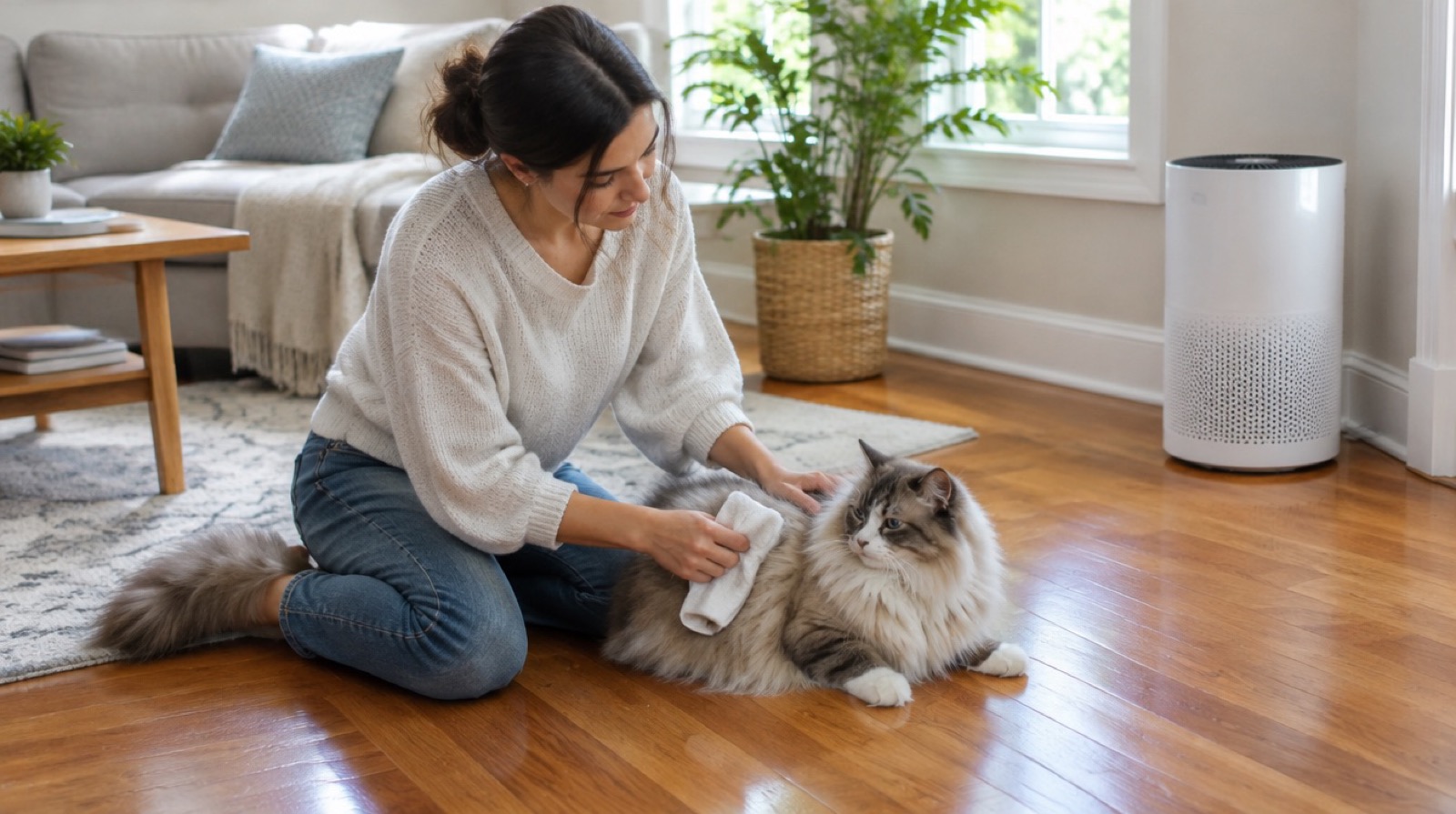
| Wipes | Pre-moistened cloths that wipe dander and loose hair off the pet | Best Friends Animal Society |
| Other triggers | Lower dust, pollen and other allergens too, since many people react to more than one | Humane World for Animals |
| Medical treatment | Ask your doctor or an allergist about treatment options, including allergy shots | Humane World for Animals; Best Friends Animal Society |
Humane World for Animals says a combination of medical control of symptoms, good housecleaning and allergy shots is most likely to let an allergic person live with pets, and suggests finding an allergist who understands that you want to keep yours.
When rehoming is the right call
Rehoming makes sense when a doctor confirms the pet is the cause and reactions stay severe or dangerous after you have tried treatment and home changes, or when the allergic person's doctor advises against a longer trial. Best Friends Animal Society's cat allergy advice ends the same way: if you have tried all the possible solutions without success, it points owners to its guide on rehoming a pet.
While you search, keep the pet out of the allergic person's space, and let someone else handle its care where you can. If the reactions are too strong for the pet to stay at all, ask a relative or friend to keep it for a few weeks: Humane World for Animals says a pet may be more comfortable with someone it already knows. That buys time for a careful match instead of a rushed one.
- Moving in with someone allergic: try the home steps and an allergy test before the move, and have a backup plan in case they do not work.
- A child's new symptoms: ask your pediatrician about testing before you decide; the pet may not be the trigger.
- Your own allergy, mild and manageable: Humane World for Animals says many people with allergies that are not life-threatening live happily with their pets.
Rehoming your pet through LocalPetFinder because of an allergy
Once a doctor has confirmed the pet as the cause and rehoming is the plan, a free LocalPetFinder listing lets you find the next home without a shelter stay. Your pet remains with you, or with the relative or friend minding it, until you pick an adopter. There is no charge and no commission. A person on our team looks over the listing once you have confirmed your email, and adopters write via LocalPetFinder rather than to your own email or phone.
- Separate first, then list. The steps above for keeping the pet away from the allergic person still apply while the listing is up.
- Call the original rescue or breeder before listing if your contract requires a return.
- Name the allergy in the description. It tells adopters the move is about your health, not the pet's behavior, and only our review team reads your answer to the form's "Why are you rehoming?" question.
- Answer the compatibility questions honestly. Kids, dogs, cats and house or litter training: "Unknown" is a fine answer when you are not sure.
- Ask about allergies on the first call, so the new home is not cut short for the same reason. Our guide to screening adopters covers that call. Start a free listing.
Finding your pet a new home
An allergy is one of the easiest reasons to explain to an adopter, because it says nothing bad about the pet. Say it plainly, and describe the pet's personality, health and habits honestly: Humane World for Animals tells owners to share any medical or behavior issues so adopters can judge the fit. Start with family and friends, ask any shelter or rescue you know whether it offers courtesy listings while the pet stays with you, and call the original rescue or breeder if the pet came from one, since some contracts require the pet to go back.
Screen each person by phone, then meet in person. Ask whether anyone in their household has allergies, so the pet does not face a second move for the same reason. Best Friends says a pet can take weeks to months to settle into a new home, so share its routine, food and favorite things, hand over the medical records, and transfer the microchip registration. Our guides on how to rehome a dog, how to rehome a cat, screening adopters and rehoming a pet safely cover each step.
If you need a shelter instead, book ahead: many take owner surrenders by appointment. See how to surrender a dog or how to surrender a cat, or our Texas guides for cats in Houston, San Antonio, Dallas, Austin and Fort Worth.
Local dog surrender and rehoming guides
Each city guide compares how that city's shelters take in owned dogs, what they charge, and the help that can let you keep your dog.
Local cat surrender and rehoming guides
Each city guide compares how that city's shelters take in owned cats, what they charge, and the help that can let you keep your cat.
Frequently asked questions
Tap a question to expand
Can I keep my pet if I am allergic to it?▼
How do I know my pet is really causing my allergy?▼
Are there hypoallergenic dogs or cats?▼
Do air purifiers help with pet allergies?▼
Does bathing my dog or cat reduce allergens?▼
My child is allergic to our dog. Should we rehome it?▼
My doctor says the pet has to go quickly. What do I do?▼
Can my pet stay with a relative while it is listed on LocalPetFinder?▼
More rehoming help
Guides for your situation
Why you are rehoming changes what to do first. Pick the guide that matches your situation, or start with the decision guide if you are still weighing it.
State rehoming guides
What the big shelters in each state ask at surrender, the help that may let you keep your pet, and the state law on giving up an animal.
Breed-specific rehoming guides
Rehoming a Husky is a different job than rehoming a Chihuahua. These guides cover the breed rescues worth contacting first and what adopters of each breed look for.