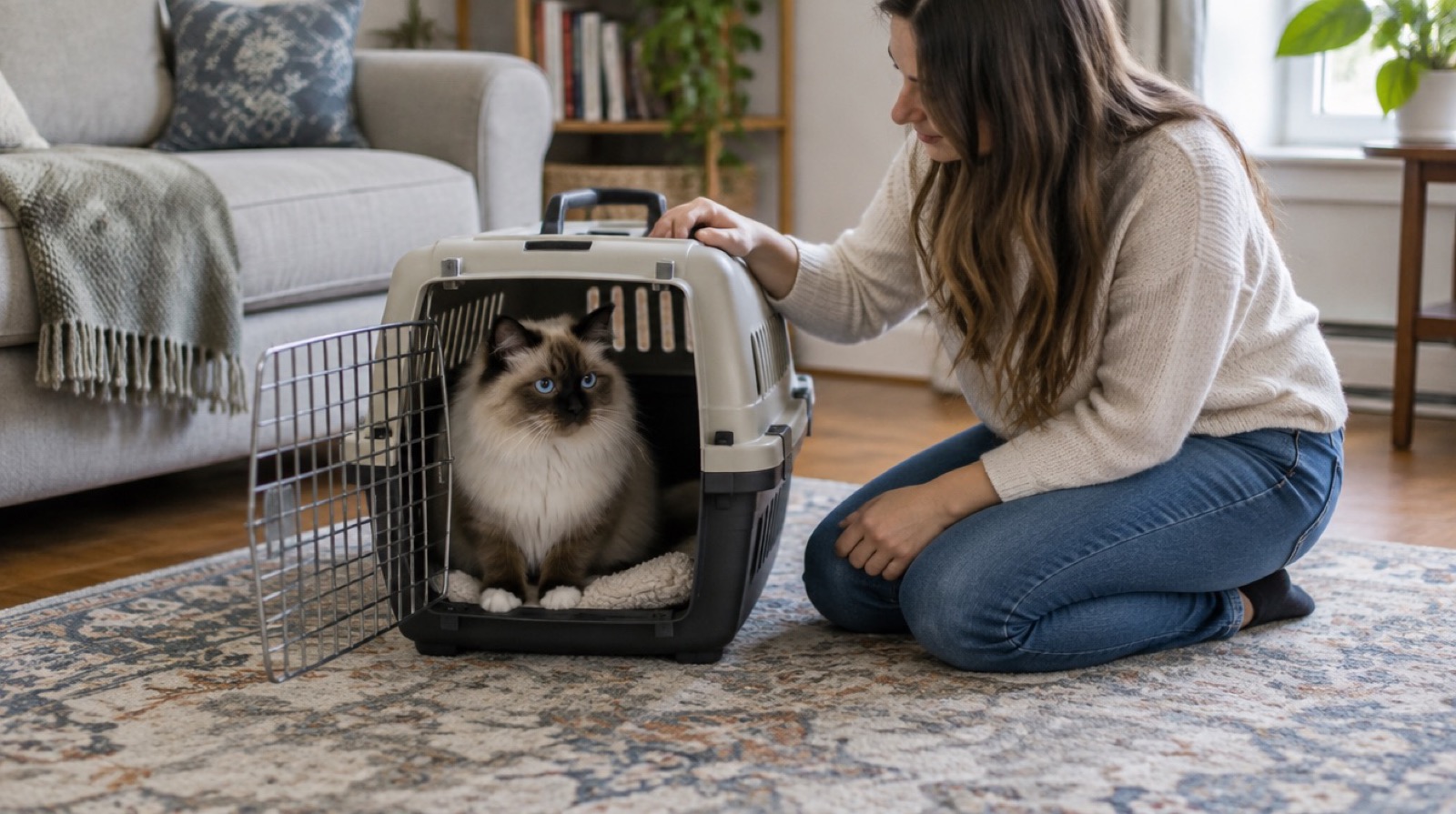
The short answer
Call the breeder or shelter you got your cat from first; Humane World for Animals notes an adoption contract may require the cat's return. Ragdoll rescues that publish an owner-surrender process are hard to find, so plan a direct rehoming with the cat at home. The Cat Fanciers' Association says Ragdolls are gentle and trusting, so they should be introduced with extra care to cats or dogs that may not be as gentle. Share any heart screening (Cornell lists the Ragdoll among breeds where HCM is more prevalent) and the cat's diet and weight, since CFA notes Ragdolls may be at risk for obesity.
LocalPetFinder is a directory, not a shelter or rescue. Shelter rules and fees change: each organization's own page has the current ones. The facts in this guide were checked against the cited pages on November 26, 2026.
Rehome your cat on LocalPetFinder, free
List your cat at no cost. They stay home until the right family is found, adopters message you through LocalPetFinder without seeing your email, and you choose who adopts. A person reviews every listing before it goes live.
This guide is for Ragdoll owners in the US, including family members rehoming a relative's cat. It covers who to contact first, what a new owner needs to know, how to screen a home with other pets, and how to help the cat settle. Our general guide on how to rehome a cat covers each step.
What a new owner should know about the breed
The Cat Fanciers' Association (CFA) describes Ragdolls as loving without being demanding, gentle, calm and sociable. It says they adapt easily to most environments, do not need much living space, and rarely show aggression, which makes them good with children and other animals. The catch is their trust: CFA says it means they should be introduced with extra care to existing cats or dogs, who might not be as gentle.
Ragdolls are a large, slow-maturing breed. CFA says they reach full coat color at two years and full size at four, and that mature males can reach or exceed 20 pounds. CFA says their semi-long coat lacks a thick undercoat, which means less shedding and matting, and recommends combing at least once or twice a week with a steel comb.
Health and care records
Cornell University's Feline Health Center lists the Ragdoll among breeds in which hypertrophic cardiomyopathy (HCM), a thickening of the heart's muscular walls, is more prevalent, and says it is diagnosed by echocardiography. CFA adds that breeders now routinely test for it. Pass on any heart screening results or a breeder's health papers.
CFA also notes Ragdolls are known for their love of food and may be at risk for obesity. Write down the cat's food, portions and current weight so the new owner keeps it steady. Humane World for Animals asks owners to share medical and behavior issues so adopters can judge the fit.
Choosing a home with other pets
Ask every applicant exactly which animals live in the home and how they behave with cats; CFA's warning about pets that may not be as gentle is the thing to probe. Best Friends Animal Society says that if the adopters already have cats, meeting in their home is best, and it suggests paying close attention to how the visitors treat the cat and how the cat reacts to them.
Ask how they plan to introduce the cat to resident pets, given CFA's advice to take extra care. If you are rehoming a relative's cat after an illness or death, our guides on owner illness and a death in the family cover finding the records and the microchip registry.
Using LocalPetFinder to rehome a Ragdoll
Once you have asked the breeder or shelter your Ragdoll came from, a free LocalPetFinder listing lets you look for a home while your cat stays in the place it knows. You read every message from adopters on a private page and choose who adopts, which matters for a breed CFA calls gentle and trusting.
- Describe the household you want. If your Ragdoll should not live with a pushy cat or a boisterous dog, say so in the description.
- Answer the compatibility questions from experience. Mark Good with kids, other cats and dogs from what you have actually seen; Unknown is a fair answer.
- Write down food, portions and weight, since CFA notes Ragdolls may be at risk for obesity.
- Mention heart screening or breeder health papers, and keep them ready for the handover.
- Start a free listing, or read how rehoming on LocalPetFinder works first.
Finding an adopter and finishing the handover
After the breeder or shelter, start with people you know, then your vet's office, pet supply stores and local shelters or cat rescues that post courtesy listings, as Humane World for Animals and Best Friends suggest. If you find a breed group, confirm on its own site that it takes owner surrenders. Screen by phone, meet in person and finish with a written agreement, the records and the microchip transfer; our guide to screening adopters has the questions. We do not suggest a rehoming fee amount; the national guides cited here do not set one.
Tell the new owner that adjusting can take weeks to months, as Best Friends says. If nothing works out, our cat surrender guide explains shelter intake. Never let the cat loose: in Texas, Penal Code 42.092 makes unreasonable abandonment of an animal a Class A misdemeanor.
Rehoming guidance for cat owners
Humane World for Animals
Formerly the Humane Society of the United States. Advice on keeping a pet through a hard patch, checking your adoption or breeder contract, and finding a new home yourself.
Best Friends Animal Society
A step-by-step rehoming guide: photos, flyers, phone screening, meeting in the adopter's home when they have cats, and a written contract.
Local cat surrender and rehoming guides
Each city guide compares how that city's shelters take in owned cats, what they charge, and the help that can let you keep your cat.
Frequently asked questions
Tap a question to expand
Is there a Ragdoll rescue that will take my cat?▼
Can a Ragdoll go to a home with dogs or other cats?▼
What health issues should I tell an adopter about?▼
I am rehoming my mother's Ragdoll. Where do I start?▼
Should I charge a rehoming fee for my Ragdoll?▼
Will my Ragdoll cope with a new home?▼
Can I ask in my Ragdoll's listing for a home without dogs?▼
More rehoming help
Guides for your situation
Why you are rehoming changes what to do first. Pick the guide that matches your situation, or start with the decision guide if you are still weighing it.
State rehoming guides
What the big shelters in each state ask at surrender, the help that may let you keep your pet, and the state law on giving up an animal.
Breed-specific rehoming guides
Rehoming a Husky is a different job than rehoming a Chihuahua. These guides cover the breed rescues worth contacting first and what adopters of each breed look for.