The short answer
Try to settle where the pet lives before deciding to rehome it: ask who does the daily care, whose new housing allows pets, and who can afford the pet alone. Gather the paperwork (adoption contract, microchip registration, vet records, license) and ask a family law attorney or mediator how your state treats pets. In Texas, a court issuing a protective order can bar a party from removing or harming a pet (Family Code 85.021 and 85.022). If you are leaving an abusive home, the National Domestic Violence Hotline is 1-800-799-7233, and the Animal Welfare Institute's Safe Havens for Pets directory lists shelters that help with pets. If you agree to rehome, agree in writing and choose the adopter together.
LocalPetFinder is a directory, not a shelter or rescue. Shelter rules and fees change: each organization's own page has the current ones. The facts in this guide were checked against the cited pages on November 26, 2026.
Rehome your pet on LocalPetFinder, free
List your pet at no cost. They stay home until the right family is found, adopters message you through LocalPetFinder without seeing your email, and you choose who adopts. A person reviews every listing before it goes live.
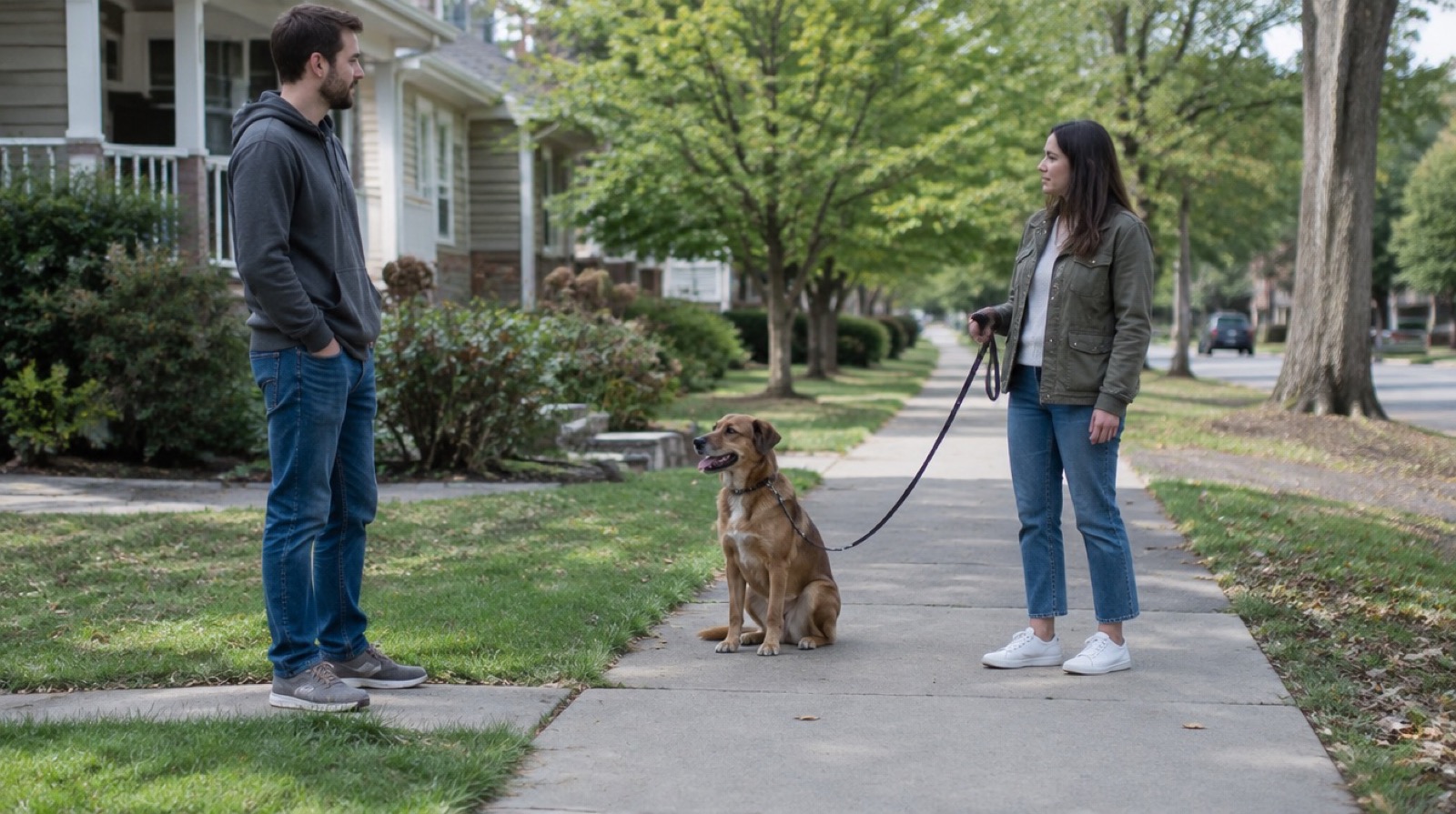
This guide is for couples and families who are separating and have a dog or cat between them. It covers the practical questions that settle most cases, what Texas law says about pets in protective orders, help for people leaving abuse with a pet, and how to rehome together if neither of you can keep the pet. It is not legal advice: for questions about property and custody, talk to a family law attorney or a mediator in your state.
Slow down if you can
A pet that has gone to a new family is hard to get back, so avoid deciding in a rush. Humane World for Animals (formerly the Humane Society of the United States) reminds owners that many challenges are temporary and it may be possible to stay together. If you can, agree on a short-term arrangement first: one of you keeps the pet for now, the other has set visiting time, and you revisit the question when your housing is settled.
While you sort things out, keep the pet's routine steady; Best Friends Animal Society says keeping a pet's routine as stable as possible can go a long way toward helping it cope with a move. Write down its food, walks, feeding times and vet now, so whoever keeps it has the full picture.
Who keeps the pet: the practical questions
Most couples can settle the question by looking honestly at the next year, not the last one. These are the questions that usually decide it.
| Question | Why it matters |
|---|---|
| Who has done the daily care? | Feeding, walks, vet visits and training show who knows the pet's needs |
| Whose new home allows this pet? | Best Friends Animal Society notes that many landlords restrict breeds and sizes of dog, and some do not allow cats; get any permission in writing |
| Who can afford the pet alone? | Food, vet care and boarding fall on one income; see our guide on financial hardship if money is the issue |
| Whose schedule fits? | Long days away, travel or shift work change what a dog or cat needs from the household |
| Where are the children living? | If children are attached to the pet, it may make sense for it to live where they spend most of their time |
| Are other pets involved? | Decide whether pets that live together should stay together; ask your vet if you are unsure how they would cope apart |
- Gather the paperwork: the adoption contract or bill of sale, microchip registration, vet records and any city license or registration. You will need them whoever keeps the pet, and an attorney or mediator may ask for them.
- Ask about the law in your state: how a divorce court handles pets depends on where you live, so ask a family law attorney or mediator before you file anything about the pet.
- Update the records once you decide: move the microchip registration into the keeper's name, and update any city registration. In Houston, BARC says a pet's registration must be updated when it is given away.
If you share care of the pet
Some couples share a pet between two homes. If you try it, put the arrangement in writing: where the pet lives and when, handovers and holidays, which vet it sees, and who pays for what. Ask your vet how your pet is likely to cope with moving between two homes.
Plans change, so agree in writing on what happens if one of you moves or the arrangement stops working: who keeps the pet if shared care ends, and that neither of you will rehome it without telling the other.
Leaving an abusive home with a pet
Fear for a pet keeps some people from leaving an abusive home. Some domestic violence shelters cannot take animals, so ask about pets when you call and know where else to look.
| Texas Family Code | What a court may do in a protective order |
|---|---|
| Sec. 85.021(1)(C) | Prohibit a party from removing a pet, companion animal or assistance animal from the possession or care of a person named in the order |
| Sec. 85.022(b)(7) | Prohibit the person found to have committed family violence from harming, threatening or interfering with the care, custody or control of a pet, companion animal or assistance animal of a protected person or their household |
Texas law. Ask the court, a legal aid office or a family violence advocate whether to include your pet when you apply for a protective order. Other states have their own rules.
Help for people leaving abuse with a pet
Call the National Domestic Violence Hotline at 1-800-799-SAFE (7233). The Safe Havens for Pets directory, created and managed by the Animal Welfare Institute (AWI), lists places that help with pets of people experiencing domestic violence or homelessness; Dallas Animal Services notes that AWI is not equipped to give direct help to survivors and points them to the hotline. In Houston, Houston Humane Society and Fort Bend Women's Center work together through the Southeast Texas LINK Coalition to shelter pets while their owners get back on their feet, Houston Humane Society says. Ask Fort Bend Women's Center (281-342-HELP (4357)) or Houston Humane Society (713-433-6421) about space.
If neither of you can keep the pet
Rehoming goes best when you both agree, in writing, before anyone advertises the pet. Decide together who will handle calls and meetings, what you will tell adopters, and whether either of you wants news of the pet afterward; an adopter may agree to updates, but do not make them a condition. If the pet came from a shelter, rescue or breeder, call them first: Humane World for Animals notes that some adoption contracts require the pet to be returned.
Ask family and friends before strangers, since Humane World for Animals says a pet may be more comfortable with someone it already knows. Be honest with adopters about the reason, which says nothing bad about the pet, and about its health and behavior. Screen by phone, meet in person, sign a written agreement and transfer the microchip registration. Best Friends Animal Society says a pet can take weeks to months to settle into a new home. Our guides on how to rehome a dog, how to rehome a cat, screening adopters and helping a pet through the transition cover each step.
If a shelter is the only option, many take owner surrenders by appointment and some keep waitlists; see how to surrender a dog or how to surrender a cat, and in Texas, rehoming in Texas. Never leave a pet behind in a home one of you is moving out of: in Texas, unreasonably abandoning an animal in your custody is a Class A misdemeanor under Penal Code 42.092.
Using LocalPetFinder when neither of you can keep the pet
If you have both agreed in writing to rehome, a free LocalPetFinder listing gives you one shared place to find the next home, with the pet staying where it lives now until the handover. Listing is free, with no commission. Whoever submits the form confirms that they own the pet, which is one more reason to have the written agreement first. Our reviewers check the listing once that email address is confirmed, and adopters write through the site without seeing anyone's email or phone number.
- Decide whose email goes on the form. Every adopter's message lands in that inbox, with a link to reply privately, so choose the person who will handle calls and meetings.
- Agree how messages get shared, so the adopter is a choice you make together, not one person's call.
- Settle any fee together. It is optional, appears on the listing and is collected at the handover, never before the adopter meets the pet.
- Agree who closes it out. The links in our emails edit the listing, mark the pet adopted or withdraw it. Once you both agree, start a free listing, or read how rehoming on LocalPetFinder works.
Local dog surrender and rehoming guides
Each city guide compares how that city's shelters take in owned dogs, what they charge, and the help that can let you keep your dog.
Local cat surrender and rehoming guides
Each city guide compares how that city's shelters take in owned cats, what they charge, and the help that can let you keep your cat.
Frequently asked questions
Tap a question to expand
Who gets the dog in a divorce?▼
Can we share custody of our pet after a breakup?▼
Can I rehome our pet without my ex's agreement?▼
Can a Texas protective order cover my pet?▼
Where can I go with my pet if I am leaving an abusive partner?▼
How do I change the microchip after a breakup?▼
What if neither of us can keep the pet?▼
Can my ex and I list our pet on LocalPetFinder together?▼
More rehoming help
Guides for your situation
Why you are rehoming changes what to do first. Pick the guide that matches your situation, or start with the decision guide if you are still weighing it.
State rehoming guides
What the big shelters in each state ask at surrender, the help that may let you keep your pet, and the state law on giving up an animal.
Breed-specific rehoming guides
Rehoming a Husky is a different job than rehoming a Chihuahua. These guides cover the breed rescues worth contacting first and what adopters of each breed look for.